
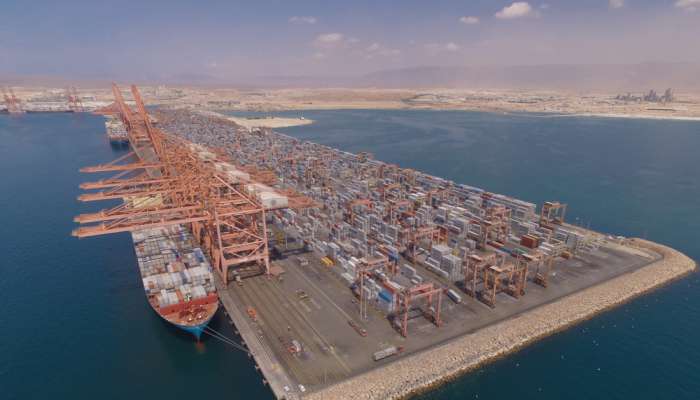
Oman attracted more foreign direct investment by the close of the second quarter of 2026, with the stock of FDI reaching OMR32.211 billion, a 6.4 per cent increase from a year earlier. The preliminary figures were released by the National Centre for Statistics and Information (NCSI) and reported on Saturday 17 October 2026.
During the quarter, investment flows into the Sultanate amounted to about OMR1.932 billion. The data shows that oil and gas extraction continued to dominate the FDI stock, while manufacturing and financial intermediation also posted gains. The United Kingdom remained the largest source of foreign capital, followed by the United States.
Oil and gas leads, but other sectors grow
Oil and gas extraction accounted for the largest share of Oman's inward FDI stock, standing at OMR25.824 billion at the end of the second quarter, up 5.7 per cent year-on-year. The sector also drew the bulk of quarterly inflows, with OMR1.397 billion recorded during the three-month period.
Manufacturing ranked second with OMR2.830 billion in FDI, a 4.7 per cent annual rise. Flows into the sector during the quarter were OMR128.3 million, reflecting continued interest in industrial projects.
Financial intermediation was the third-largest recipient, with holdings climbing 18.4 per cent to OMR1.601 billion. The sector attracted OMR248.4 million in flows during the quarter, the highest among the non-hydrocarbon sectors listed.
UK remains top investor as US and China expand
The United Kingdom retained its position as the leading source of FDI in Oman, with holdings valued at OMR16.766 billion, up 6.6 per cent from a year earlier. US investments grew 7.3 per cent to OMR8.685 billion, keeping the country in second place.
Kuwaiti holdings rose 1.7 per cent to OMR1.385 billion, while Chinese investment climbed 5.8 per cent to OMR903.8 million by the end of the second quarter. The figures underline the diversified base of foreign investors in the Sultanate.
The NCSI data did not provide a breakdown of flows by country for the quarter, but the stock positions indicate that traditional partners in Europe and North America remain dominant, with Asian investors gradually increasing their presence.
Quarterly inflows support broader investment trend
The OMR1.932 billion in FDI flows during the second quarter contributed to the overall increase in the stock of foreign capital. The inflows were spread across extractive industries, manufacturing and financial services, among other sectors.
Oman has been actively promoting itself as an investment destination through various initiatives aimed at diversifying the economy away from oil. The latest figures suggest that these efforts are yielding results, although the hydrocarbon sector still absorbs the majority of foreign capital.
The preliminary nature of the NCSI release means that the numbers may be subject to revision in future publications. Nevertheless, the upward trend in FDI stock is consistent with the government's objectives of attracting foreign investment to support economic growth and job creation.
What it means for Gulf residents and businesses
For businesses in the Gulf, the continued growth in Oman's FDI stock signals opportunities in sectors such as manufacturing and financial services, where foreign participation is rising. Companies looking to expand in the region may find a more open investment climate and a growing network of international partners.
Residents in Oman and neighbouring Gulf states could benefit from increased economic activity associated with foreign investment, including potential job creation and technology transfer. The expansion of financial intermediation, in particular, may lead to a wider range of financial services and products.
However, the heavy concentration of FDI in oil and gas extraction means that the Sultanate's attractiveness to foreign investors remains closely tied to hydrocarbon prices and global energy demand. Diversification into other sectors will be key to sustaining long-term growth and ensuring that the benefits of foreign investment are broadly shared across the economy.