
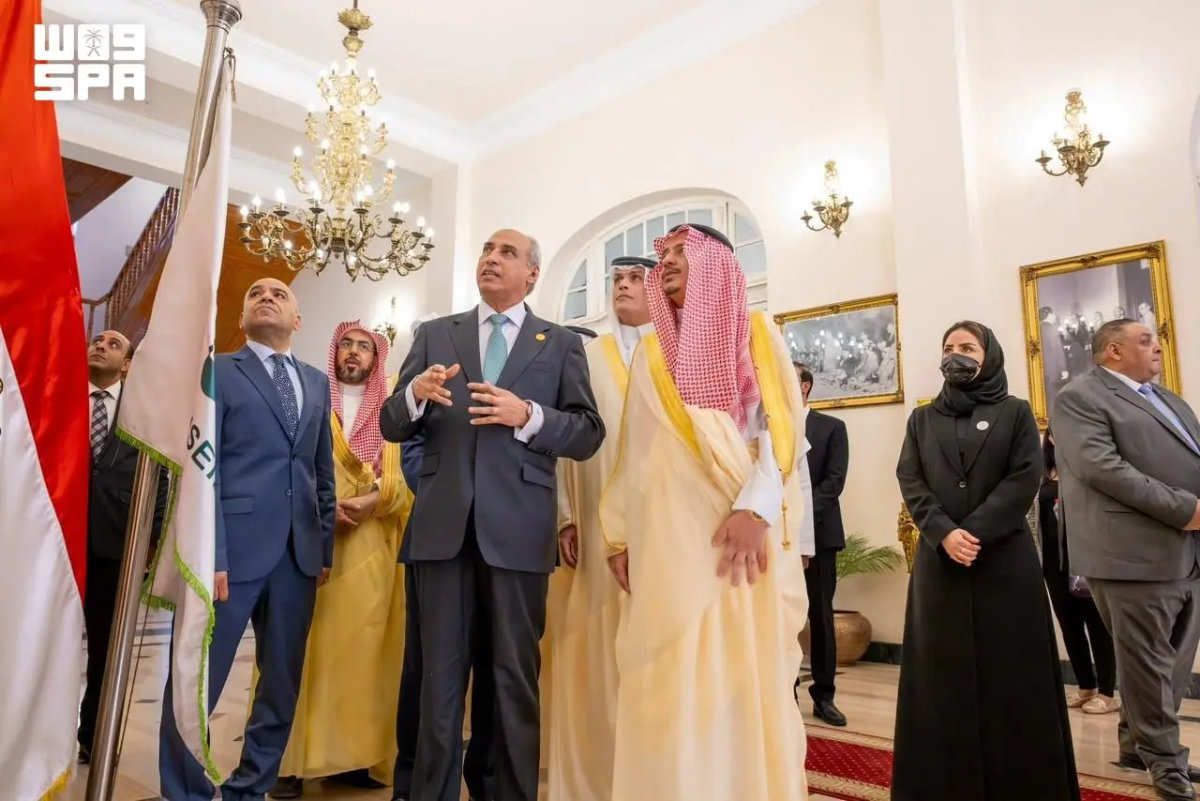
Saudi Arabia has formally joined the Arab Union of Administrative Judiciary, becoming its 16th member, according to a report by the Saudi Press Agency on Sunday. The signing ceremony took place in Cairo and was attended by a high-level Saudi judicial delegation.
The union is a regional body that brings together administrative courts and councils from across the Arab world. Membership allows the Kingdom to exchange judicial expertise with other member states and to share the experience of its Board of Grievances, a key administrative justice institution.
Ceremony in Cairo
The signing ceremony was held in Cairo and was attended by a high-level Saudi judicial delegation. Khalid Al-Shammari, Deputy Saudi Ambassador to Egypt, was present at the event, highlighting the diplomatic importance of the occasion.
Senior officials from the Egyptian State Council also attended, underscoring the host country's role in the union. The ceremony marked a formal step in expanding the union's membership to include Saudi Arabia.
The presence of both judicial and diplomatic figures reflects the broader significance of the membership, which is expected to strengthen ties between administrative justice institutions in the region.
Leadership and exchange
Mahmoud Abu El-Dahab, who leads both the Arab Union of Administrative Judiciary and the Egyptian State Council, presided over the event. He toured the Saudi delegation, including Alohaydib, through the Egyptian State Council's historic Princess Fawkia Palace headquarters.
The two officials exchanged commemorative shields to mark the occasion, a symbolic gesture of cooperation between the two institutions. Such exchanges are common in diplomatic and judicial settings to celebrate new partnerships.
Membership in the union is designed to facilitate the exchange of judicial expertise among member states. Saudi Arabia's participation is expected to contribute to this goal by sharing its own experiences in administrative justice.
Sharing expertise
Alohaydib said that the Board of Grievances' experience would be shared across the Arab world. The Board of Grievances is Saudi Arabia's administrative judicial body, responsible for resolving disputes involving government entities.
By joining the union, the Kingdom can both offer its expertise and learn from the practices of other member states. This two-way exchange is a core benefit of membership, according to the union's objectives.
The sharing of expertise is expected to enhance the quality and efficiency of administrative justice in member countries, fostering greater consistency in how administrative disputes are handled.
What it means for the Gulf
For residents and businesses in the Gulf, Saudi Arabia's membership in the Arab Union of Administrative Judiciary could lead to more predictable and harmonized administrative justice processes. As the Kingdom shares and receives expertise, administrative courts may become more efficient in resolving disputes between individuals or companies and government bodies.
The membership is expected to broaden partnership networks and create lasting cooperation channels among member institutions. This could facilitate cross-border legal cooperation and improve the overall business environment by ensuring that administrative decisions are subject to fair and consistent review.
For Gulf residents, stronger administrative justice systems mean greater protection of rights when dealing with government agencies. Businesses may benefit from clearer rules and more reliable dispute resolution mechanisms, which can enhance confidence in investing and operating across the region.
The move also signals Saudi Arabia's continued engagement with regional judicial bodies, which could pave the way for further integration and cooperation in legal matters affecting the Gulf.