
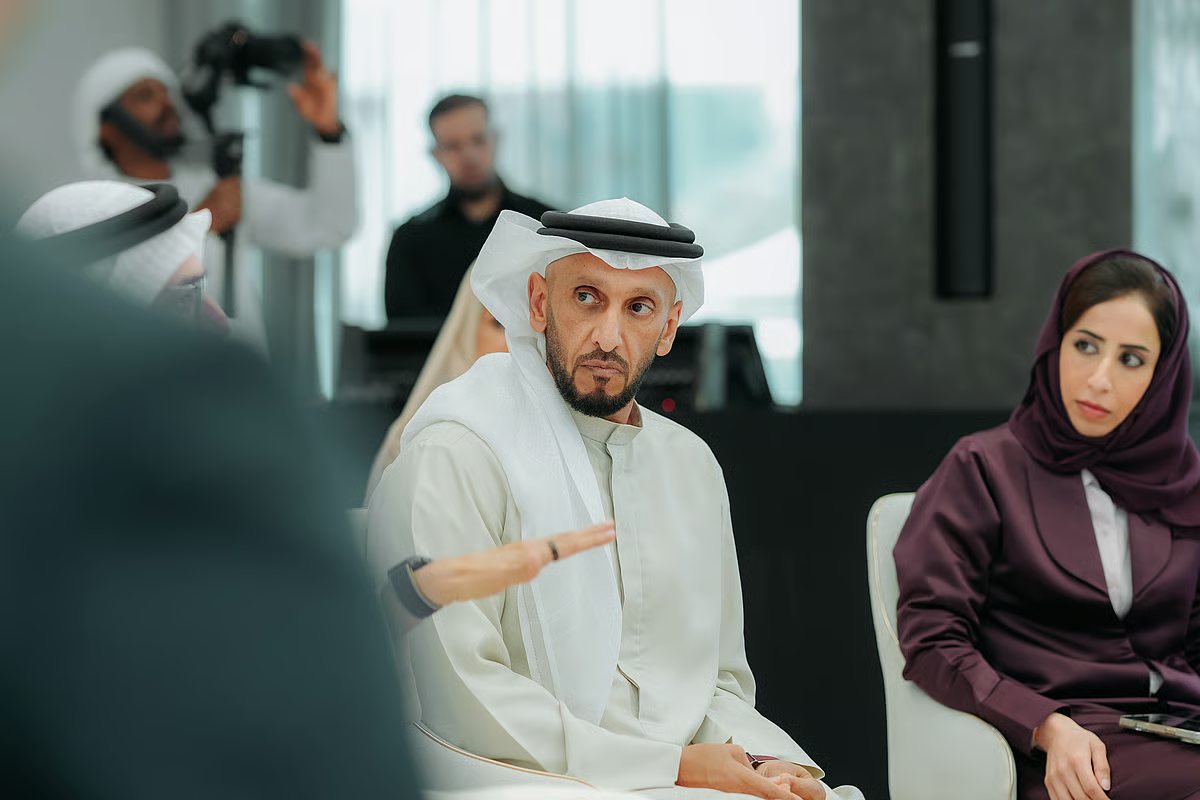
A senior UAE media official has warned that automated accounts are exacerbating tensions between countries, revealing that more than 11,000 new bots appeared in October 2026 alone. Abdulla bin Mohammed bin Butti Al Hamed, who chairs the National Media Authority, described the figure as a huge amount and a huge number, speaking at the UAE Correspondents' Majlis in Dubai.
Al Hamed said authorities monitor bots that amplify content and worsen relations between countries, but he acknowledged that he did not know which platforms or actors were behind them. The remarks highlight a growing concern in the Gulf over the use of artificial intelligence and fake accounts to spread disinformation and damage reputations.
Scale of the problem
The appearance of more than 11,000 new bots in a single month underscores the volume of automated activity that UAE officials are tracking. Al Hamed called the number a huge amount, a huge number, suggesting that the surge is far beyond what might be considered routine background noise on social media.
He did not identify the platforms or the actors involved, leaving open the question of who is behind the accounts. The lack of attribution makes it harder to address the root cause, even as the authorities step up monitoring.
The bots are said to spread AI-generated videos and other material that damages the UAE's reputation. Such content can circulate quickly and reach wide audiences before it is flagged or removed.
Cooperation with platforms
UAE authorities cooperate with social media companies to remove bots, but much of this work happens without public announcements, according to Al Hamed. The quiet approach is intended to avoid giving the accounts the visibility they seek.
Officials also avoid rebutting every false claim, a strategy aimed at denying such content credibility and attention. This selective response reflects a broader effort to prevent disinformation from dominating public discourse.
In April, Al Hamed said over 100 accounts were blocked for inciting violence during Iranian attacks. He noted that those blocked accounts were not tied to any single country, indicating that the threat can come from multiple directions.
Legal consequences
The UAE has established penalties for those who spread harmful content. The minimum penalty is one year in prison and a fine of Dh100,000, while during a crisis the penalties rise to two years and a minimum fine of Dh200,000.
In February 2026, the Public Prosecution said that reposting unverified content can be punished. The warning serves as a reminder that sharing information without checking its accuracy can carry legal risks.
These measures are part of a wider legal framework designed to deter the spread of false information and to hold accountable those who amplify it, whether knowingly or otherwise.
Regional coordination and what it means for the Gulf
At a March GCC meeting, Al Hamed proposed a round-the-clock AI monitoring centre. The idea reflects a recognition that the bot problem is regional in nature and requires continuous vigilance.
For residents and businesses in the Gulf, the surge in bots poses risks to reputation, public trust and even security. Companies can find their brands caught up in false narratives, while individuals may be exposed to misleading content that inflames tensions.
The UAE's approach, combining monitoring, platform cooperation and legal deterrence, signals that authorities are treating disinformation as a serious threat. The challenge remains significant, given the anonymity of the actors and the speed at which bots can be deployed.